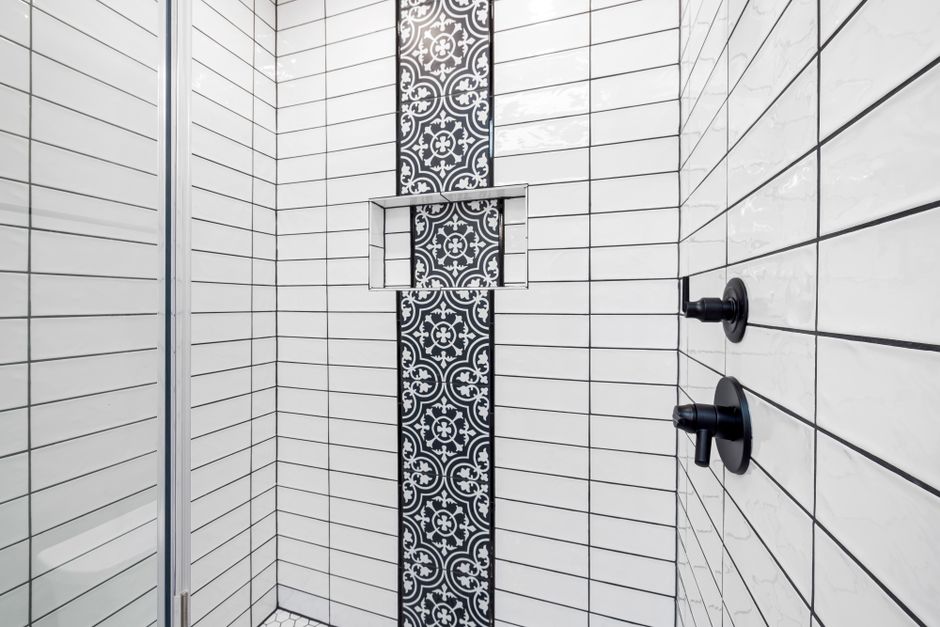
When shower grout starts crumbling, staining, or falling out in chunks, it’s easy to assume the whole shower needs to come out. In many Boise homes, that’s not the case. A professional regrout can restore a tiled shower to a clean, watertight condition at a fraction of the cost and disruption of a full remodel — as long as the underlying tile and substrate are still sound.
Here’s how to think about the decision, and what a regrout actually involves.
What Regrouting Really Means
Regrouting is the process of removing the top layer of old, deteriorated grout from between tiles and replacing it with fresh grout. It is not a surface coating or a paint job. The old grout is cut out to a consistent depth using specialized tools, the joints are cleaned, and new grout is packed in and finished. Once cured, the joints can be sealed to slow future staining and moisture absorption.
Done properly, a regrout restores the visual uniformity of the tile and — more importantly — closes off the tiny gaps where water has been sneaking behind the wall.
Signs Your Shower Is a Good Candidate
Regrouting works best when the tile itself is still in good shape. Consider a regrout if you’re seeing:
- Cracked, powdery, or missing grout lines, especially in corners and along the floor
- Persistent staining or discoloration that won’t respond to cleaning
- Grout that feels soft or crumbles when you scratch it with a key
- Isolated loose tiles that can be re-bonded rather than replaced
- Failed caulking at changes of plane (corners, tub-to-tile joints) that has pulled away or blackened
- Mildew that keeps returning even after thorough cleaning
These issues are common in Treasure Valley showers that are ten or more years old, particularly where the original grout was never sealed or where harsh cleaners have eroded it over time.
When Replacement Really Is the Better Call
Regrouting has limits. If the substrate behind the tile is soft, spongy, or water-damaged — meaning the drywall or backer board itself has failed — new grout won’t solve the underlying problem. Similarly, if a large percentage of tiles are loose, cracked, or already falling off, or if you can see active water intrusion into adjacent rooms, you’re looking at a repair that goes beyond the grout lines.
A professional inspection can usually tell the difference. Tapping tiles to listen for hollow spots, checking movement at seams, and examining the condition of existing caulking gives a clear picture of whether the shower needs a regrout, a partial repair, or a full rebuild.
What to Expect From the Process
A typical shower regrout involves removing the old grout, cleaning the joints, replacing any failed caulking at corners and transitions, re-bonding loose tiles where possible, and installing fresh grout. After cure time, the new grout is often sealed to help resist staining and moisture. Depending on the size of the shower and the condition of the existing grout, the work generally spans one to two visits, plus cure time before the shower can be used again.
Color-matching is part of the conversation too. You can stay close to the original grout color or shift to something lighter or darker — color sealing is another option if you want a uniform, sealed finish on existing grout that’s still structurally sound.
Before You Decide
If your Boise shower looks tired but the tile is still solid, it’s worth having someone evaluate it before assuming you need a remodel. Regrouting, re-bonding, and recaulking together can add years of service to a shower that seems past saving — and keep water where it belongs.